
My Mom Died
How it feels to be an orphaned adult.

My dad died, and six weeks later my mom died. The week before Thanksgiving to the week after New Year’s was bookended with loss.1
They were both sick for a long time, in different ways. We were bracing for one or the other of them to die for years, living in a form of suspended time that was condensed and magnified in the little rooms where we sat in the days leading to their deaths.
For the past five years: If my head were a circle and you looked at it like a pie graph, on a non-crisis day, 25% of my thoughts would have been labeled PARENTS. Now, I have a quarter of my head-circle back.
In its place is not really grief, more like a vacancy. Many days, I don’t feel a thing. All colors mixed together turned to white. All feelings melted together make my emotions invisible inside of me, a ghost grief.
I woke up in the middle of the night last week and told Drew: “Everything was so bad for so long for them. I don’t know how I am supposed to feel now.” There is a way in which what has happened is so much, it is somehow nothing at all.
My own grief is in the world and not of it
We were living the best we could for years, in the presence of their illnesses. Now we don’t remember how to live our lives without the constant presence of their crises. When you are used to bracing for little earthquakes, your body stays in a defensive posture.
Someone at church asks how I am. I answer with a functional list: I got dressed, ate toast. My legs work, I am drinking water.
There has been a tremendous kindness from our friends and community that multiplied from the passing of one parent to the both of them. Everyone is so nice. It is almost more than I can take, this much kindness, especially when there is very little I feel in these first weeks.
I think about how it could have been if my dad died and my mom was not sick. I would have written a very different story. My mother would not have had Parkinson’s Disease Dementia. My mother would have taken a ceramics class after my dad died. She would have started making her own salad dressing with all this time on her hands (not shaking). She would have taken a Viking River Cruise.
The First Weeks of Grief, a Shortlist:
The first weeks after they were both gone, I did all sorts of things I don’t usually do:
Roasted a chicken for stock, likely (subconsciously), for dad’s favorite—matzoh ball soup—but never got that far.
Cleaned the bathroom for four hours. Sorted expired pill bottles, washed out empty travel shampoos and conditioners, re-lined drawers. Fixed a cabinet, scrubbed unseen corners. My hands wanted to do something to focus my mind.
Made biscuits for the first time since middle school because my mom’s dad used to. Never met him, but mom said he’d use the top of a glass as a cutter for the dough. Did the same.
I do not ever watch football. I watched the Bears’ playoff game alone in the basement last Sunday. We’d watch the Bears every Sunday as a kid in Indiana.2 Screamed gogogogo and cried when Cole Kmet caught an impossible pass with 18 seconds left in the 4th quarter, on a 4th down, on a snowy field, moving the game to overtime.
Eternity at Sea
We drove to the Oregon Coast to spread my dad’s ashes on New Year’s Day. It was very clear with little wind, a lucky break.
We looked to the left at Haystack: the huge rock, the one in the opening scene of The Goonies. To the right: the Tillamook Lighthouse, aka “Terrible Tilly”. For a while, the lighthouse held a repository for ashes and called the “Eternity at Sea Columbarium.” There was room for 300,000 urns, but the business never really got going. There are still 31 urns in the lighthouse today; thieves stole two others in the early 90s.3
On the drive home from the coast, before Tacoma, the call that Mom fell. The arrival at the memory care facility. The gory scene, the end beginning.
In mourning, I read the news. I think about Minnesota, I think of the gory body of Christ, being twisted, again, to justify an ideology of suppression and power.
In Minneapolis, an ICE agent kills Renee Good. In a moment, from living to dead. Bullets, not chemo.
My brain cannot make sense of the dissidence between a slow and inevitable death from illness and this senseless killing, over in a few seconds. Personal grief meets an ambiguous collective grief, blooms, compounds, and goes back to the place it knows best: my body.
Do I Look Different?
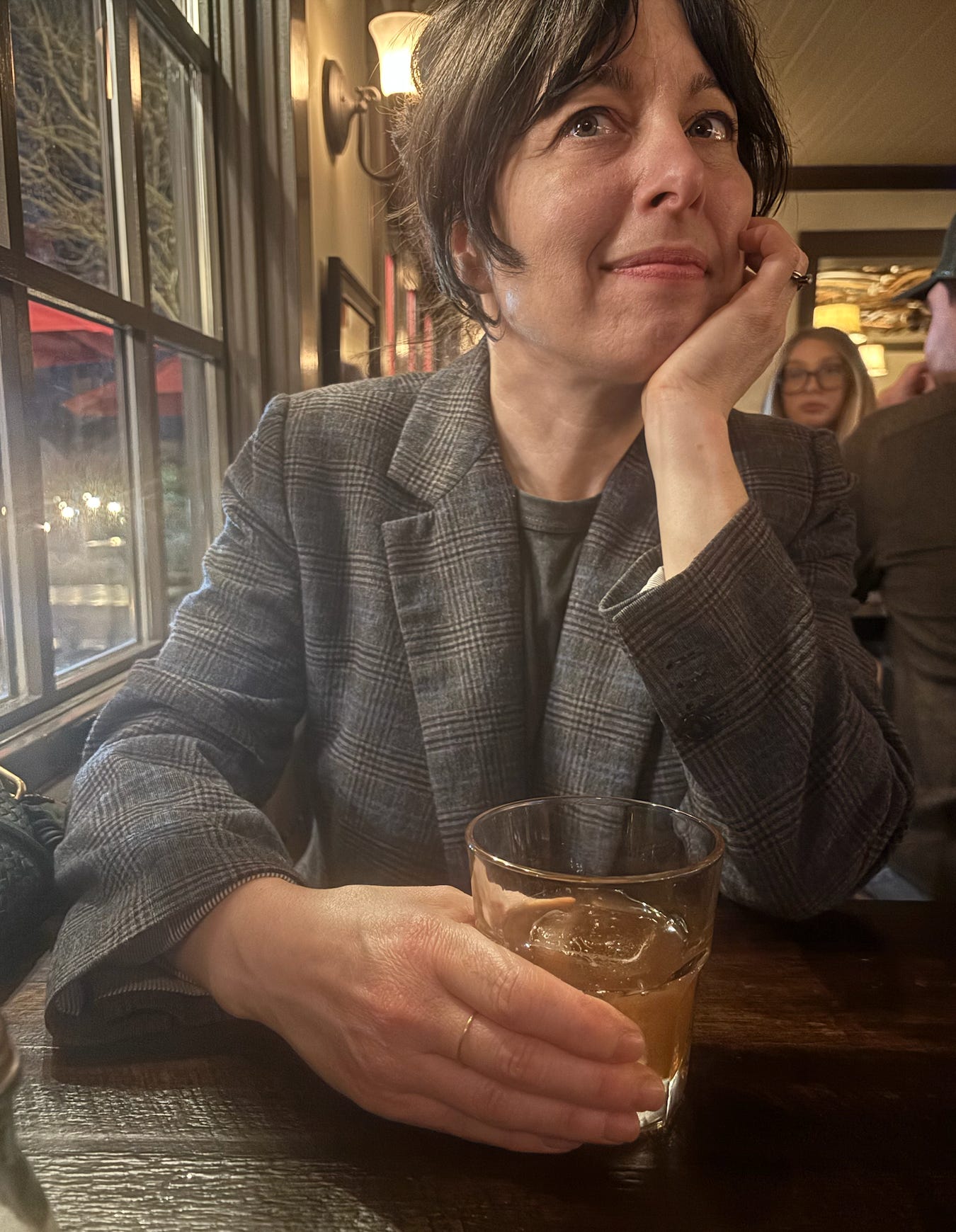
I wondered if it would feel good—feel like anything—to go out to eat, so last weekend we drove to Hollywood Tavern. It was not good or bad. I ordered a kale Caesar and a whiskey.
You know how in the movies, people look at themselves after they lose their virginity or ask a friend, “do I look different?” I took a photograph of myself holding the maple-infused shot of bourbon over a huge ice cube. It was the first photo I’d taken since my parents both died. I looked at it for a long time and asked myself, “Do I look different?”
Do I look like a different person now that the thing I have been dreading for so long has come and gone? No, I thought. I look more like myself.
Read Sue’s obituary.
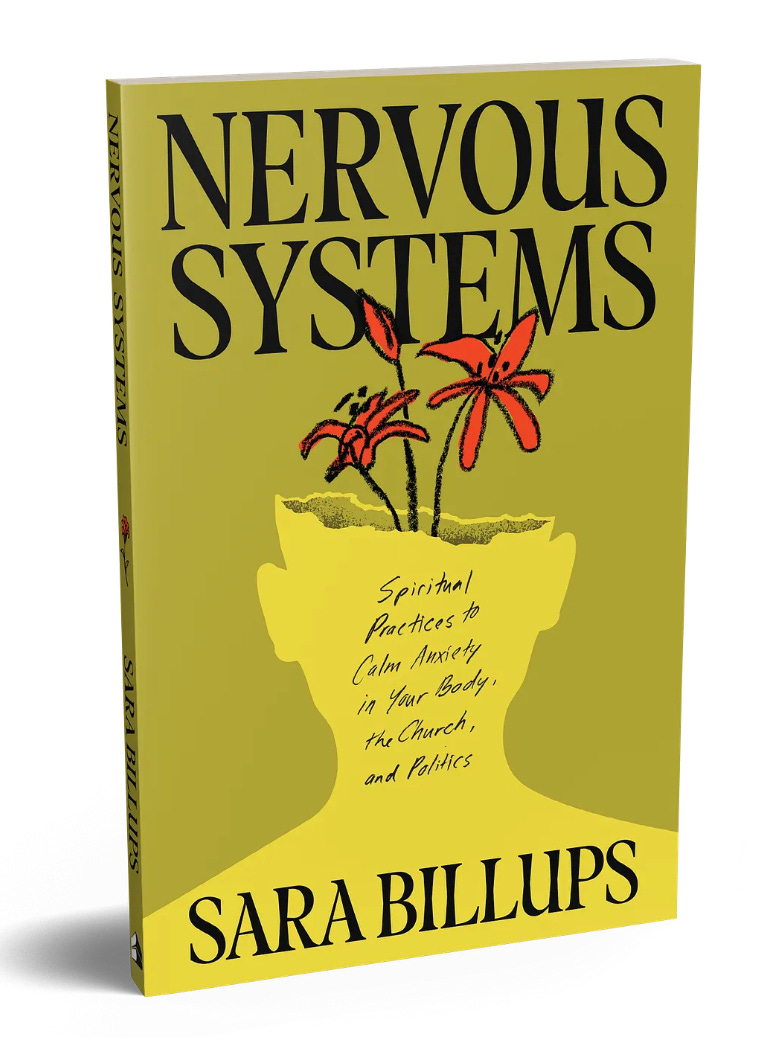
Nervous Systems: Spiritual Practices to Calm Anxiety in the Body, the Church and Politics is available everywhere books are sold.
Part memoir of caregiving in the sandwich generation and part exploration of the larger reasons why so many of us are carrying pervasive personal and collective worry, Nervous Systems asks why, instead of a healing refuge, the church has become an anxious one.
I don’t use words like “passed” instead of “died” for my parents. I didn’t hold a “celebration of life” for my dad, we had a funeral. To speak plainly about it helps me believe that they are dead. It also helps me be in the present, to be grateful for life, and to be alive.
The dog, Toto, would hide next to the toilet and shake when my mom would yell at the television things like “we’re gonna cream them” and “gogogogogo”.
https://www.opb.org/article/2022/03/29/historic-terrible-tilly-tillamook-lighthouse-for-sale/
I appreciate this vulnerable and tender voicing of the realities of living life alongside grief. Sharing it makes the rest of us not feel alone in ours, I hope sharing it helps you feel the a little less alone in yours.
This is such a raw and honest portrayal of grief that doesnt perform for anyone. The vacancy after years of bracing really hits, becuase grief after anticipating loss for so long becomes its own strange relief. I experienced similar after a long illness in my family, and those unexpected rituals (biscuits, football) are exactly how we locate ourselves when everything shifts.